Who Owns the Sequel?
I recently came across a writing app called NEO, designed specifically for people who write books. It’s free, open source, works locally, requires no subscription, and has enough features to make me wonder why the hell anyone is still paying for Scrivener.
It organizes manuscripts, chapters, and scenes, helps writers plan their novels, track writing goals, and export their work in various formats. Your files stay on your computer, with no dependence on a cloud service. Some optional features use external APIs, but you don’t have to hand your manuscript over to a company just to write a book.
It’s a surprisingly capable piece of software, but what really caught my attention was the person behind it: Hugh Howey, author of the Silo novels, which became an Apple TV+ series.
Howey is a novelist, not a professional software developer. He spent years looking for a writing app that suited his needs, tried working with developers, and even hired someone to turn his ideas into software. None of it produced what he wanted.
Then he decided to give Claude a shot.
In a post on his blog, Howey describes how he used artificial intelligence to build the writing software he’d always wanted. Within a single weekend, he had a working prototype he considered better than the tools he’d spent years trying. The project kept growing, attracted contributions from dozens of developers, and was eventually released for free on GitHub under the MIT license.
The result, in my opinion, puts a lot of commercial software to shame. Scrivener, for instance, is powerful, but it sometimes feels as though its designers believe writing a novel requires the administrative infrastructure of a multinational corporation. NEO takes a much simpler approach: let the writer write.
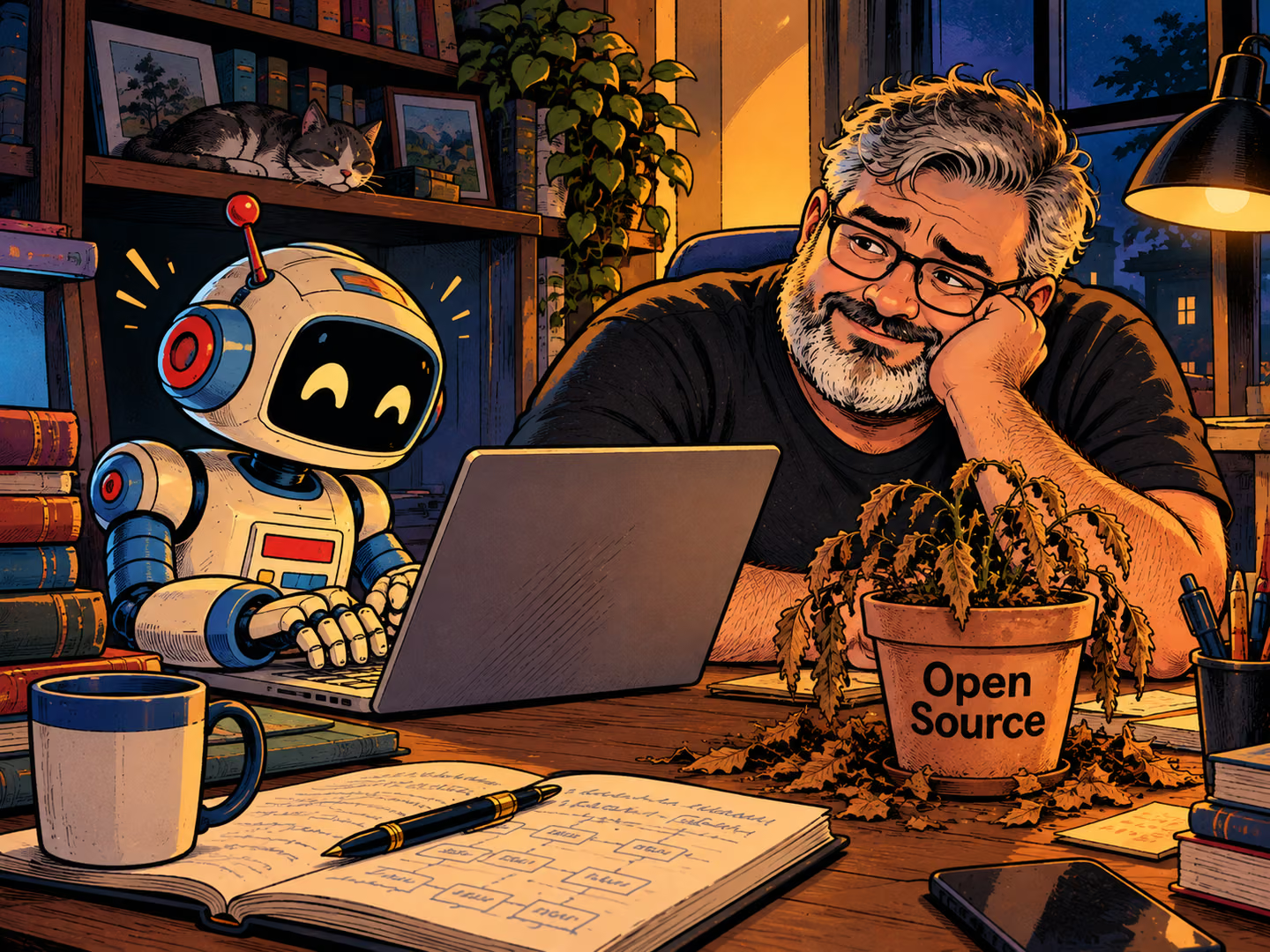
Howey understood the problem he was trying to solve. He knew what worked, what got in the way, and what was missing from the available tools. AI allowed him to turn that knowledge into a working product. That doesn’t make programmers obsolete, but it significantly narrows the gap between understanding a problem and being able to build a solution. For someone who has spent decades working in technology, it’s hard not to appreciate the significance of that shift.
But the most interesting part of this story isn’t the software.
In the comments on Howey’s post, a reader named Jon decided to poke him a little. Since Howey was so enthusiastic about using AI to write software, why not use the same technology to write the next Silo novel? If it’s good enough for programming, surely it should be good enough for literature.
The jab seemed pretty obvious. At least to me.
Howey replied: “Yup! Go for it.”
That was it.
I found the response almost comically good-natured. Here was someone being challenged about an issue that directly affects his livelihood, and he responded as casually as a neighbor giving you permission to pick a few mangoes from his tree.
But there’s a detail that makes his response more interesting. Howey had already given other writers permission to create and commercially publish stories set in the Silo universe, keeping all the proceeds for themselves. Perhaps he simply doesn’t see other people building on his stories as a threat.
I don’t know whether he recognized the provocation. What I do know is that his response seems consistent with a remarkably open attitude toward his own work.
And that’s where things get complicated.
Howey can authorize someone to write a Silo sequel because he’s the author. He can grant permission, refuse it, negotiate terms, or simply not care. Within the rights he holds, it’s his decision.
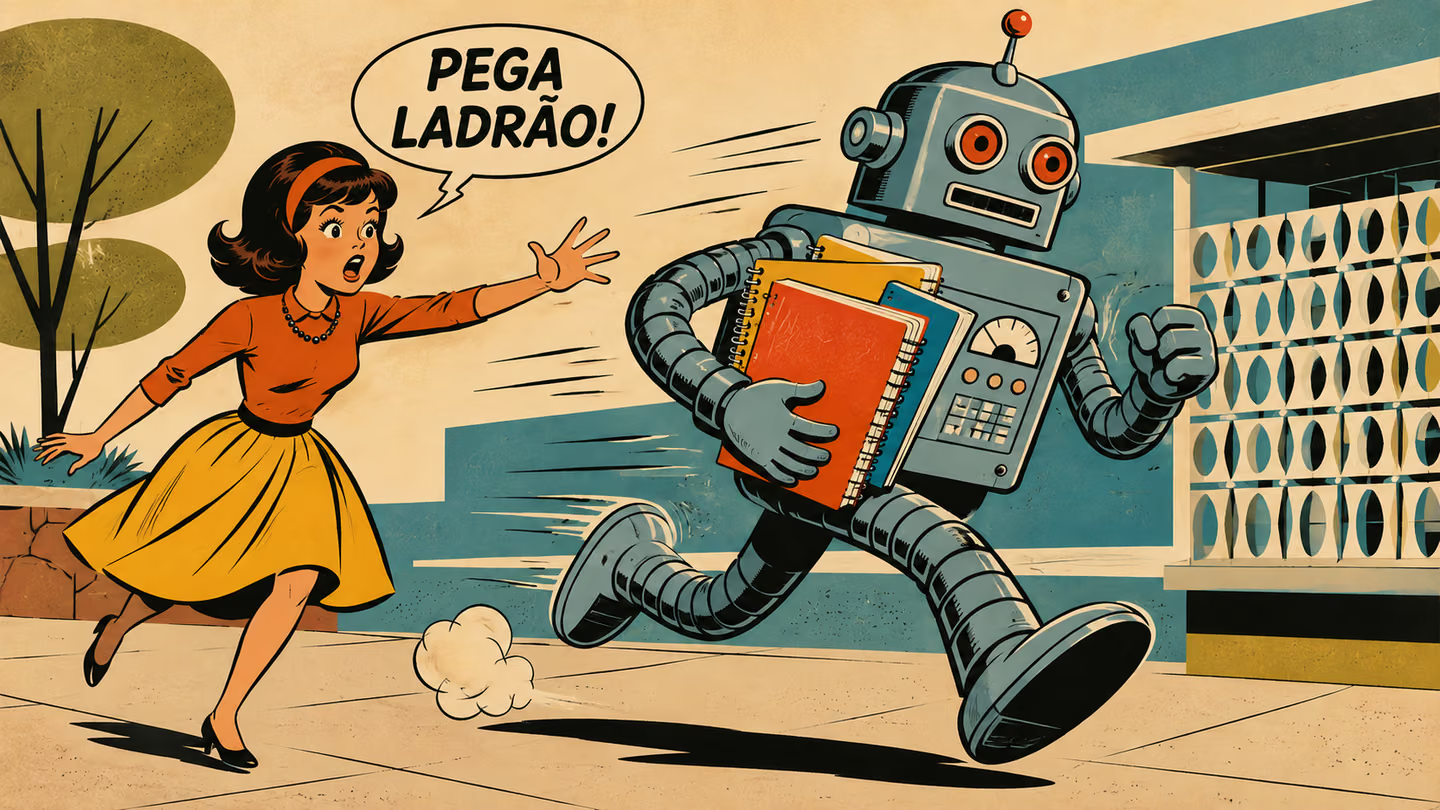
The problem with AI training is that many authors were never given that choice.
Large generative AI models were developed using enormous quantities of text, images, code, and other intellectual work, collected from different sources under different conditions. Some of that material was used without individual permission from its creators and without compensation. There are serious legal debates about the boundaries of such use, but we don’t need to wait for the courts to settle every question before acknowledging that there’s an ethical problem.
Writers, artists, and programmers have seen their work contribute to the development of tools capable of competing with them. It’s understandable that many regard this as a form of intellectual appropriation. And I see no reason to dismiss those people as enemies of progress or fools who simply don’t understand new technology.
What bothers me is how easily the debate collapses into two opposing camps. On one side are those who consider any use of AI a form of complicity in intellectual theft. On the other are those who believe anything available on the internet is fair game, and that creators should be grateful for the opportunity to contribute to humanity’s progress.
As usual, reality is considerably less pleasant than either side’s certainty.
I recognize the ethical problems surrounding AI training. I believe the concerns of people whose work has been used to develop technologies that may compete with them are legitimate. Consent, compensation, and transparency should have been part of this discussion from the beginning, rather than inconvenient details raised after the products were already on the market.
And despite all that, I use AI almost every day.
Not just to play around or try out the latest novelty. I use these tools professionally, to write code, investigate problems, analyze information, and handle tasks that are part of my daily work. In many cases, the results are extraordinary.
It would be terribly convenient to find a moral justification that made this contradiction disappear. Unfortunately, I don’t have one.
There’s an economic reality, of course. I have bills to pay, professional responsibilities, and competitors who aren’t going to abandon productive tools out of solidarity with my ethical concerns. Expecting every individual to bear the cost of a moral objection alone, while companies continue developing and selling these systems, doesn’t strike me as a particularly reasonable solution.
But it would be dishonest to claim that I use AI only because I have to.
I like these tools. I like being able to investigate a problem from angles I might never have considered on my own. I like discovering that something that once took days can now be accomplished in hours. And most of all, I like realizing that there are things I can now do that, not long ago, I probably wouldn’t even have attempted.
And this is where the argument becomes about more than productivity.
A few days ago, the disclosure of vulnerabilities collectively known as PHP2Shell brought this discussion into territory very close to home. I work in systems administration and infrastructure, and PHP underpins a substantial part of the systems I deal with professionally.
In October 2026, researchers disclosed two critical vulnerabilities in PHP itself, identified as CVE-2026-109618 and CVE-2026-109619. Both received a CVSS score of 9.2 and, under certain conditions, could allow unauthenticated remote code execution. The discoveries involved researchers from Wiz, Calif, and OpenAI, assisted by artificial intelligence tools.
What’s particularly striking is that some of the affected code dated back to PHP 5.4, released in 2012. We’re talking about problems associated with code that had been in use for more than a decade, surviving countless updates, reviews, and security analyses.
This is something quite different from asking a chatbot to draft an email or generate an illustration.
We’re talking about expanding our ability to discover complex vulnerabilities in systems used by millions of people every day. Vulnerabilities that might otherwise have remained undiscovered for a long time, although there’s no way to know how long it would have taken to find them without these tools.
Of course, that capability also creates risks. A technology that helps security researchers find vulnerabilities can help criminals do exactly the same thing. And anyone who follows cybersecurity news knows that a major vulnerability disclosure tends to attract an impressive amount of exaggeration, speculation, and people trying to turn someone else’s problem into a business opportunity.
AI has added another unpleasant dimension to this mess: the ability to produce misinformation at an industrial scale, wrapped in an appearance of authority that often has very little to do with the quality of the information.
But none of that makes ignorance a better alternative.
A vulnerability doesn’t stop existing just because nobody knows about it. It sits there, working perfectly well, waiting for someone to discover it. And if that someone has less honorable intentions than a security researcher, the consequences may be considerably worse.
I’m not suggesting that every use of AI can be justified because it might also help secure computer systems. I’m saying that an ethical discussion needs to consider the consequences of using a technology and the consequences of refusing to use it.
Abstaining isn’t necessarily a neutral choice.
NEO is a relatively modest example of what this technology can make possible. A novelist managed to build a tool that meets his needs and decided to make it freely available to others. It’s not a scientific revolution, but it’s a tangible, useful, and rather generous result.
The security vulnerabilities are a more serious example. The ability to identify flaws in complex systems can make an enormous difference to the people who depend on those systems, even if they never know that AI played a role in finding the problems.
None of this erases the question of how the models were trained. A product’s usefulness doesn’t automatically legitimize the methods used to develop it. But the reverse is also true: an ethically questionable origin doesn’t make the product’s benefits disappear.
I also think it’s important to distinguish the responsibilities of those who develop these technologies from those who use them. Decisions about what data to collect, how to use it, and which risks to accept were made by companies and organizations with vastly greater resources and power than their users. That doesn’t absolve users of responsibility, but it makes little sense to hold them entirely accountable for decisions they had no part in making.
I can use a tool while continuing to argue that its developers should compensate creators, respect their rights, and be more transparent about training practices. The contradiction is practical, and acknowledging it doesn’t make it go away.
Which brings me back to Hugh Howey.
There’s an irony here that I find particularly interesting.
A novelist used artificial intelligence to build software intended to help other novelists. The technology that made this possible belongs to a generation of models whose development has sparked an unresolved dispute over the use of copyrighted works without their creators’ consent. And Howey himself, when challenged with the prospect of someone using AI to write a sequel to his novels, responded with a cheerful “go for it.”
But there’s an important difference between an author granting permission to use his work and a company deciding it can use the work of millions of authors without asking them. Howey’s willingness to share the Silo universe doesn’t give anyone the authority to make similar decisions on behalf of everyone else.
Who gets to decide how a creative work can be used? How far does the right to learn from someone else’s work extend? At what point does that learning stop being a perfectly natural human activity and become commercial exploitation that requires consent or compensation?
I don’t have definitive answers to those questions. I’m suspicious of anyone who claims to, especially when the answers happen to align perfectly with their financial interests.
I recognize that there are serious problems with the way artificial intelligence has been developed. I respect those who speak out about them, and I believe it’s important that they keep doing so. At the same time, I use the technology, recognize its benefits, and don’t believe the world would necessarily be better off if it simply didn’t exist.
I don’t think this conflict can be resolved with the lazy assertion that technology is neutral and everything depends on how people use it. Technologies are developed by people and companies, within economic structures, with interests and decisions that profoundly shape their effects on society.
Nor do I believe technological progress is a force of nature that leaves us no choice but to accept the inevitable. We can debate rules, demand transparency, establish limits, and hold decision-makers accountable. In fact, we should be doing all of that far more seriously.
In the meantime, NEO is still installed on my computer, and I still admire the work of a novelist who managed to build the writing app he’d always wanted. I still use AI professionally, and I’m still uncomfortable with how much of this technology was developed.
It’s not an especially comfortable position. But I’d rather live with the contradiction than invent a certainty I don’t have.
As for the next Silo novel, Hugh Howey has already given his answer. Anyone who wants to write it is welcome to try.
It would have been nice if every other author had been given the chance to answer, too.