The Ads Won, But The Cartridges Made Me Lose: My First Fountain Pen
As much as I hate to admit it, I have a confession to make: advertising works on me.
I would like to say that I am a conscious, informed consumer, immune to marketing and persuasion tricks, perfectly capable of telling a real need from an artificial desire created by an ad that keeps showing up in front of me. Apparently, I am not.
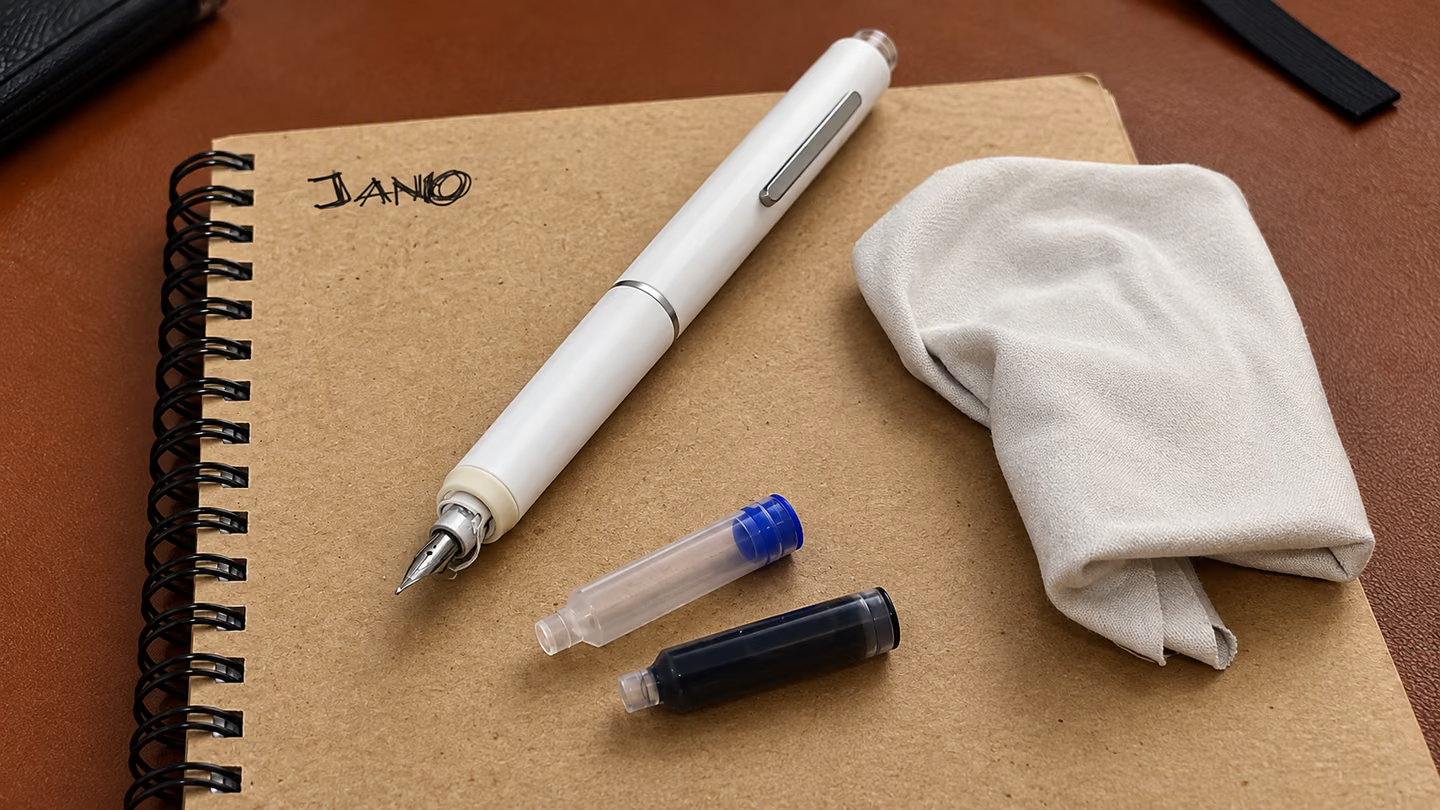
Some time ago, I started being targeted by sponsored posts from a Chinese pen brand called Writech. More specifically, they were ads for a retractable fountain pen . Until then, I did not need one, did not want one, and had never imagined I might enjoy having one.
And then, before I knew it, I had ordered one. It would become the first fountain pen I had ever owned, and I was already starting with a retractable one.
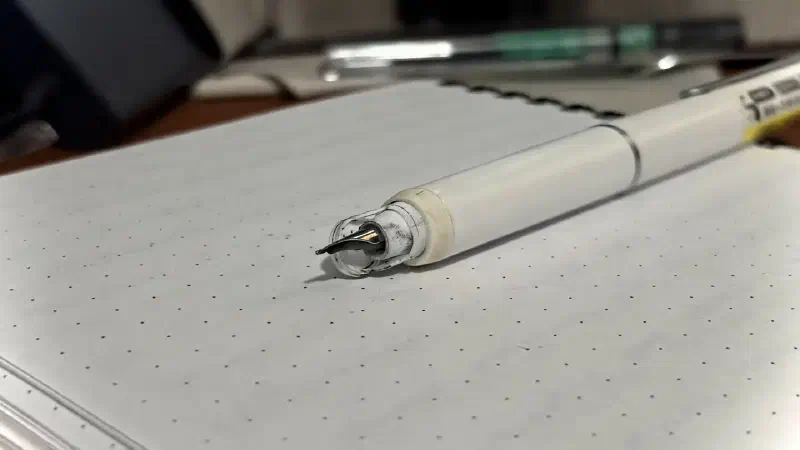
I really hoped the pen would be crap, but you know what? It was good. Much better than I could have expected, and for some time I used it every day for my Broke Ass Journaling. I used it to write down thoughts in my crappy little notebook that nobody but me ever sees, make shopping lists, jot down disposable bits of information, take meeting notes, and do whatever else I happen to feel like doing with a writing instrument.
When the pen arrived, I had absolutely no idea what the “world” of fountain pens had in store for me. But as soon as I unpacked and inked it, I knew for sure that I had a pen that wrote very smoothly on pretty much any paper. The ink did not bleed through, at least with whatever paper I had around to test it on, and the experience gave me the kind of pleasure in writing that I had always dreamed of, even if those dreams had been unconscious ones.
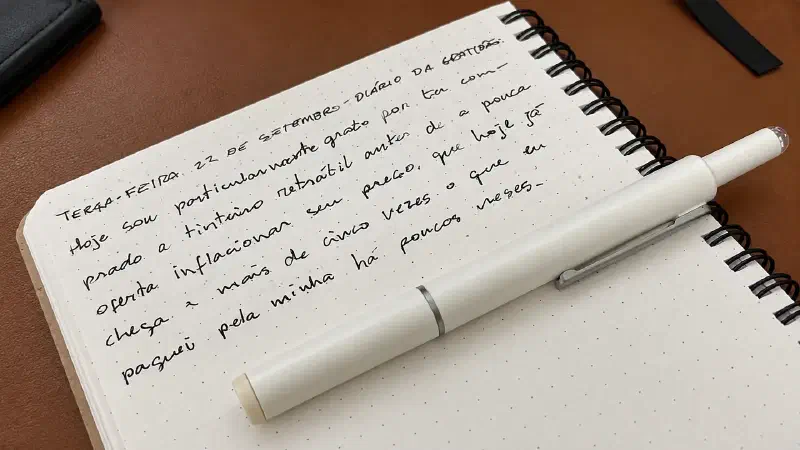
I believe one of the reasons the pen was so comfortable to write with was its M (Medium) nib, which by definition produces broader lines than F and EF (Fine and Extra Fine) nibs. On this particular pen, the ink flow was also quite generous.
But this pen was not all praise. The first thing I discovered was that the convenience of the Writech came with one rather annoying decision: the cartridges.
The retractable mechanism comes with an inconvenience when compared with conventional ink cartridges: Writech cartridges are quite small, I could not find any compatible converters, and replacement cartridges are rather hard to come by. For the most part, all you can find are black or blue ones on Chinese shopping sites. Converters are refillable ink reservoirs that can be used instead of disposable cartridges, the pen’s “refill,” basically.
The product also seems to have been quite successful. At the very least, its price has gone up considerably in a short time: I paid, a few months ago, roughly 20% of what the same pen costs on Amazon as I write this.
Since this was my first fountain pen, I had no idea that a pen sold on convenience, click, write, click, put it away, could come with an inconvenience as significant as such low capacity cartridges. And the pen really was very convenient: since the nib retracted when it was not in use, there was much less risk of accidents, and it required much less fuss when I just wanted to jot down a quick note. This also made it quite interesting for people who have cats, especially when they enter that particular mode in which they cannot stand the sight of objects sitting on a table.
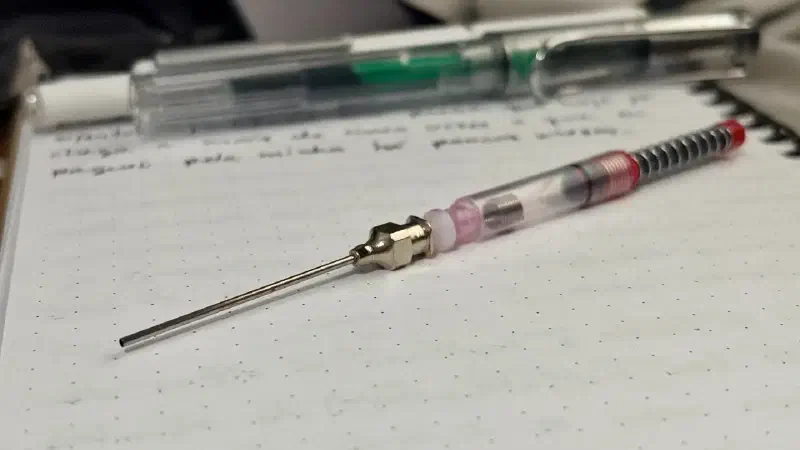
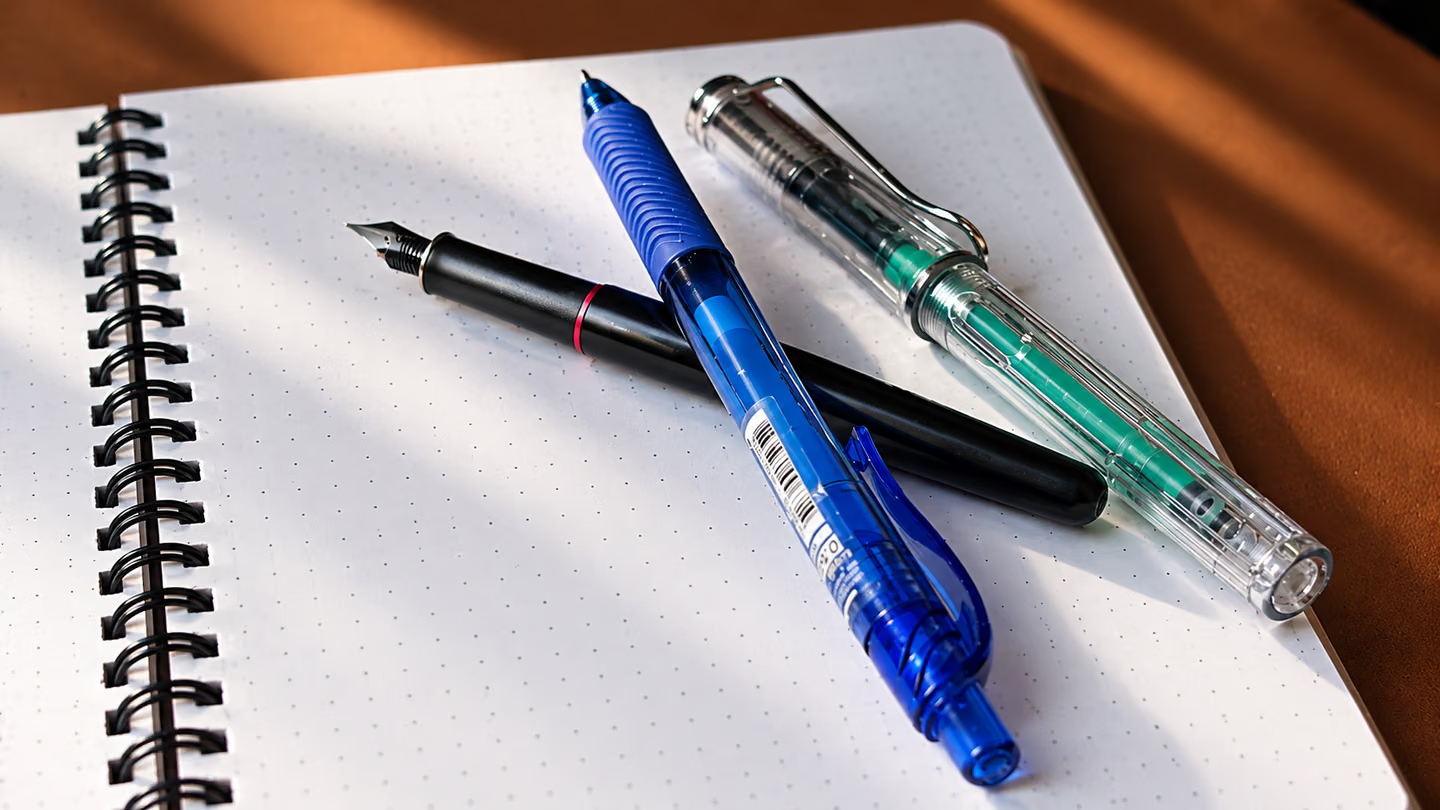
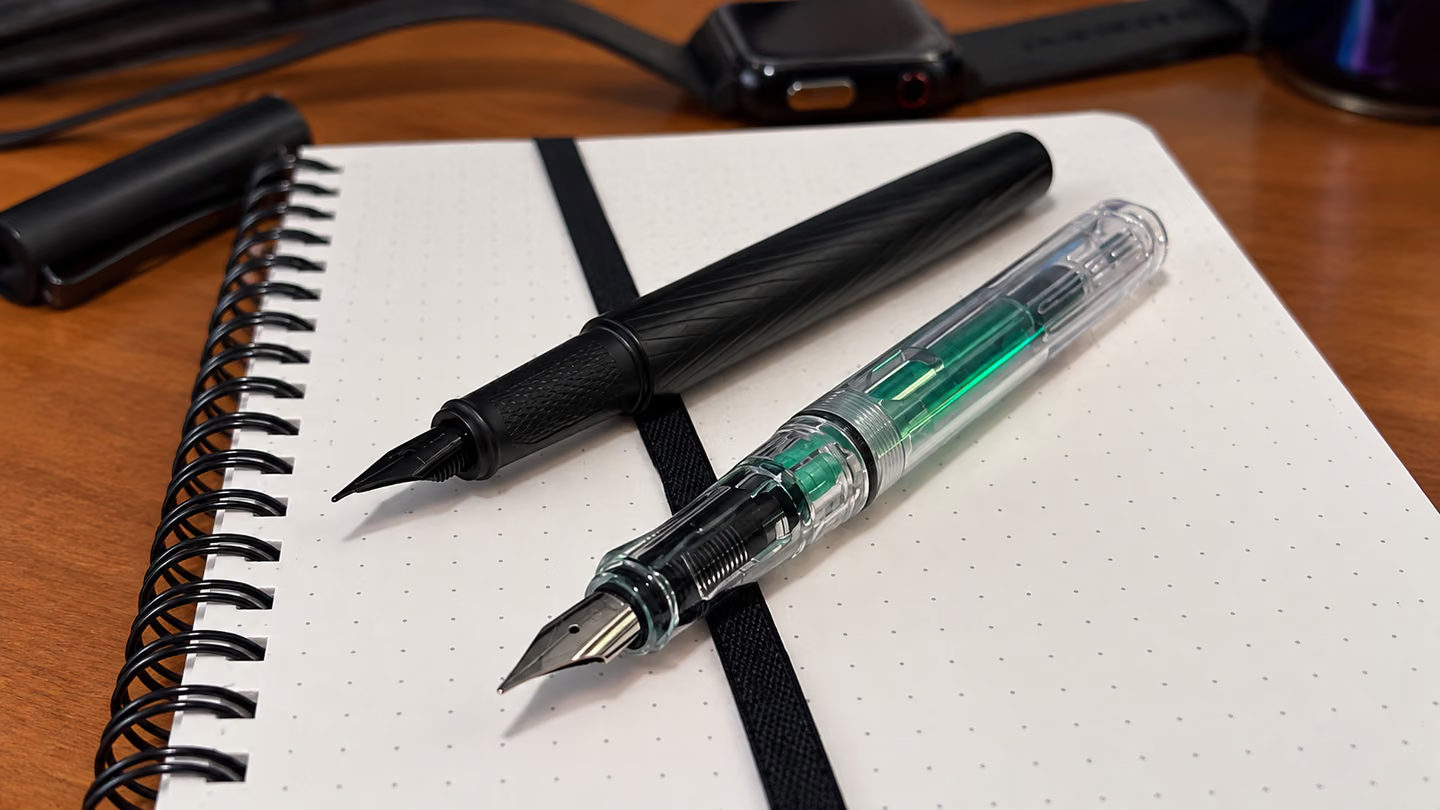
And yet, for a while, this was one of the pens I used the most, as you can probably tell from the wear already visible in the pictures illustrating this post. It was exactly this dependence that pushed me into a dumb decision: after spending some of those proprietary cartridges, I invented the idea of trying to recharge them with a syringe.
There is no mystery to using a syringe for an ink transfusion. The process literally is filling the syringe with bottled ink and emptying it into the cartridge I want to refill. I thought, with that absurd confidence of someone who watches two tutorials and already feels like an engineer, that this would give me much more flexibility in my choice of ink colors and would free me from depending on those flimsy brand cartridges.
But things went wrong, very wrong.
What I did not know, and what the internet had the moral obligation to have warned me about, is that the feeder of that pen seems to be made of some kind of high density felt, or some other material that no generous soul took the trouble to identify for me. Whatever it was, the combination between that thing, the formulation of the ink I used (Diamine , which is good quality ink), or some other factor I will probably never discover, simply rendered the pen useless.
It was not a minor flaw, an oscillation in flow, or an annoyance that could be bypassed with patience and goodwill. It was the kind of damage that turns an everyday object into a provocation to my dignity. In anger, I threw the pen in the trash.
I cannot say I am proud of having given in to Instagram advertising, and even less so of the pathetic sequence of trying to hack my own consumption with a syringe. Nor can I say I had any regrets while the pen was working: it was practical, it wrote well, I used it quite a lot. The lesson, however, came at a high price. Now I know that the promise of click, write, put it away can hide a mean architecture of dependency, the kind that turns the consumer into a hostage of tiny cartridges, rare replacements, and incompatibility with everything the rest of the world uses.
That is why this time I will not buy another retractable pen. Nor will I buy any that does not have, at the very least, compatibility with more conventional cartridges. If we already accept paying for a pen instead of simply using the one lying around in the drawer, the minimum we can demand is not being forced into homemade ink transfusions or praying that the Chinese manufacturer keeps existing for long enough.