The Pen You Already Have Is Already a Journaling Pen
When it comes to journaling — low-budget or otherwise — two things are essential: a surface to write on and something to write with. For the sake of didactics, an old habit from my teaching days, from now on we’ll call these two things “paper” and “pen.”
So the thesis I intend to demonstrate can be rewritten as follows: to practice journaling, all you need is paper and a pen.
People who use the Internet to express their ideas and feelings quite often elevate journaling to the status of an art form. For journaling to be considered valid, it apparently needs to follow rules, use specific materials and tools, have an associated aesthetic, etc. But what actually matters is that you write whatever you want, however you want, wherever you want, and enjoy the process.
That said, there isn’t really such a thing as a “journaling pen.” That Bic you borrowed at the bakery counter and never returned is as good for journaling as your willingness to write with it. You don’t need to invest in expensive pens, special inks, luxury notebooks , etc. But if you want to, you can.
Still, I think comfort matters, because if writing is unpleasant, you’ll simply avoid doing it. Not that there’s anything wrong with giving up journaling, but I’m speaking here as someone who enjoys writing and shares ideas with other people who enjoy it too.
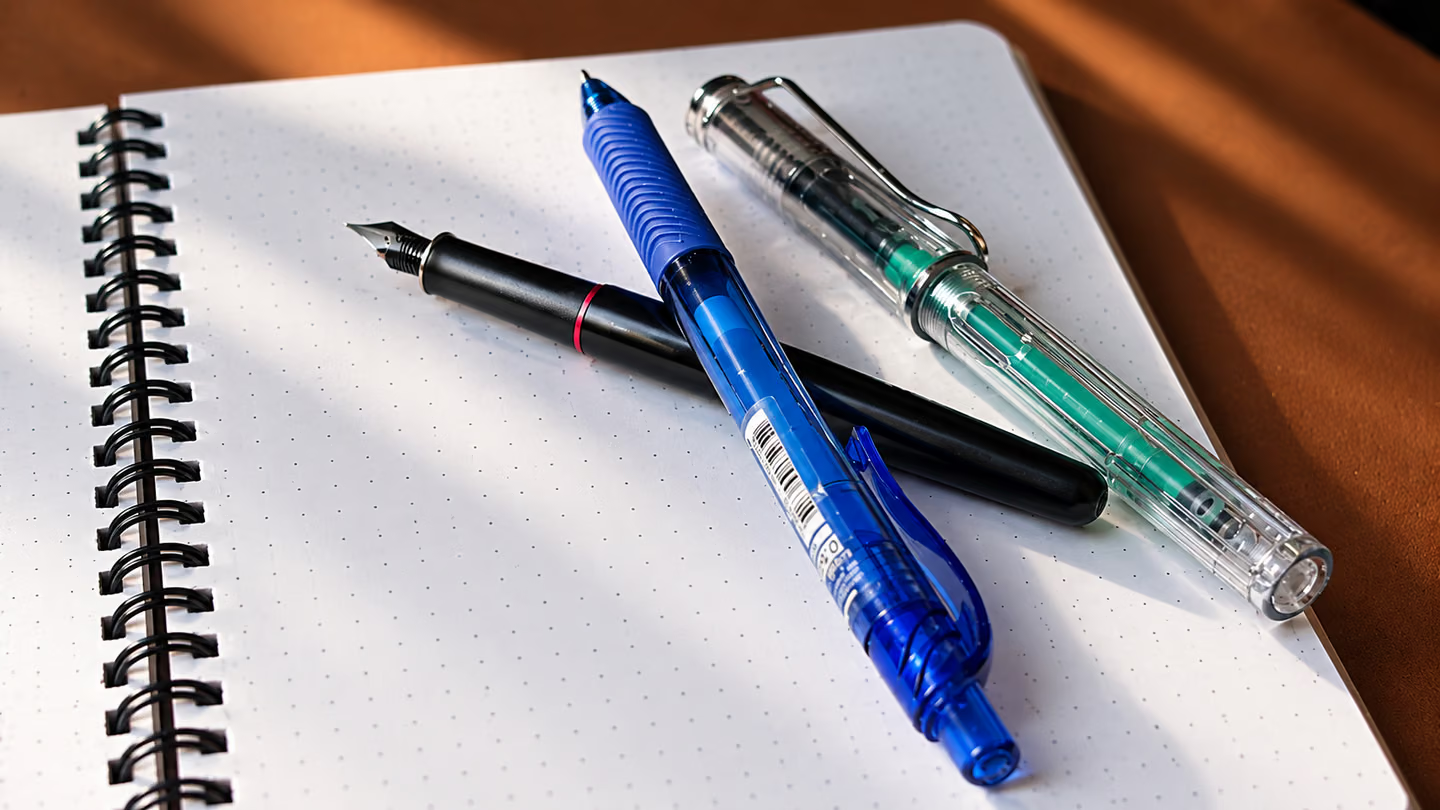
So, if you’re going to write, you might as well be comfortable. I’ve discovered that my current standard of writing comfort involves using a fountain pen with a medium or fine nib, but I’ve filled plenty of notebook pages with gel pens, ballpoints and even pencils.
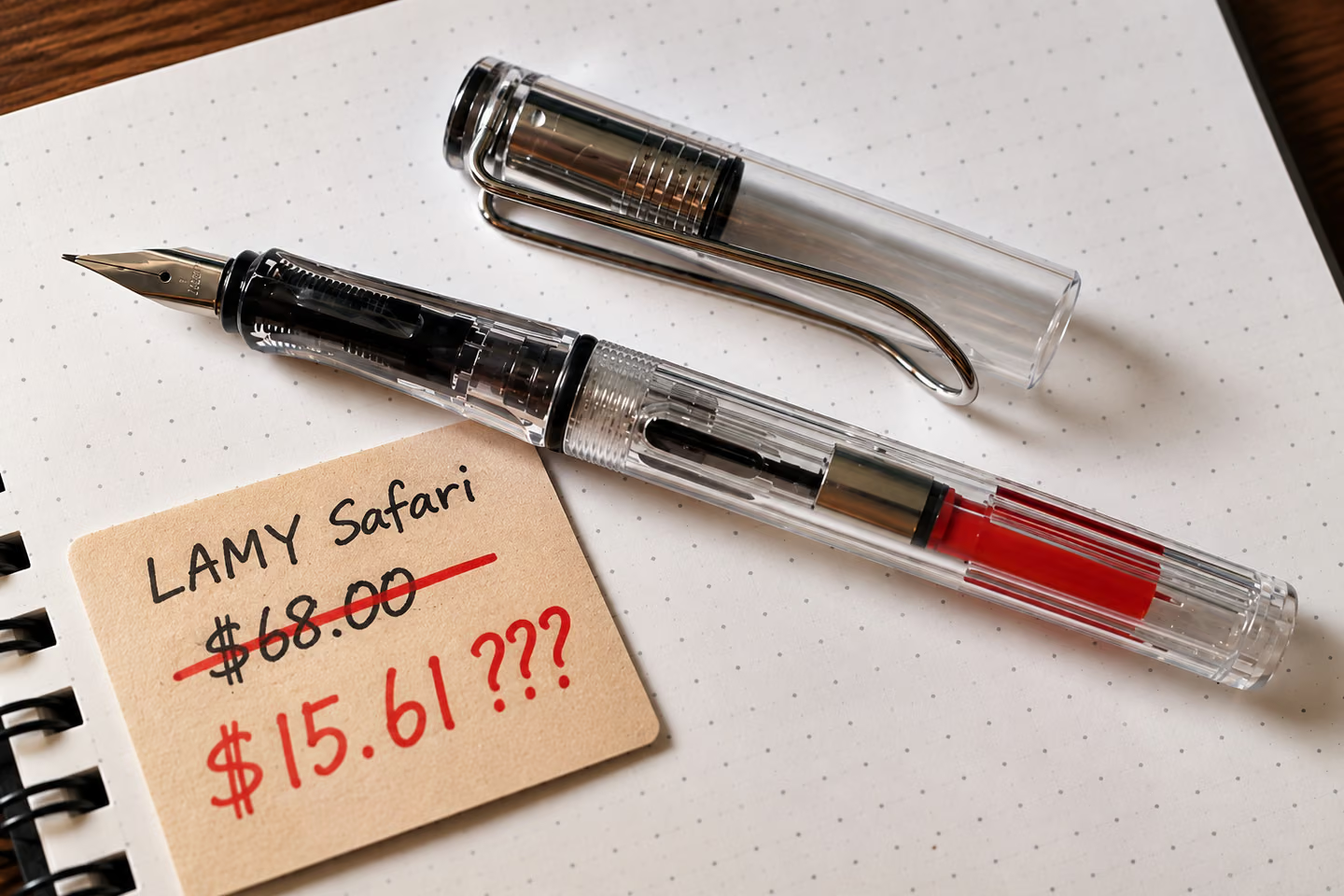
I own a few fountain pens, and the most expensive one so far is a Lamy Safari . Among fountain pen enthusiasts, it’s considered an entry-level pen, aimed at beginners. But it is actually extremely light, which makes writing almost effortless: with a good ink, very little effort is required beyond simply guiding the nib across the page, with no need to press it against the paper.
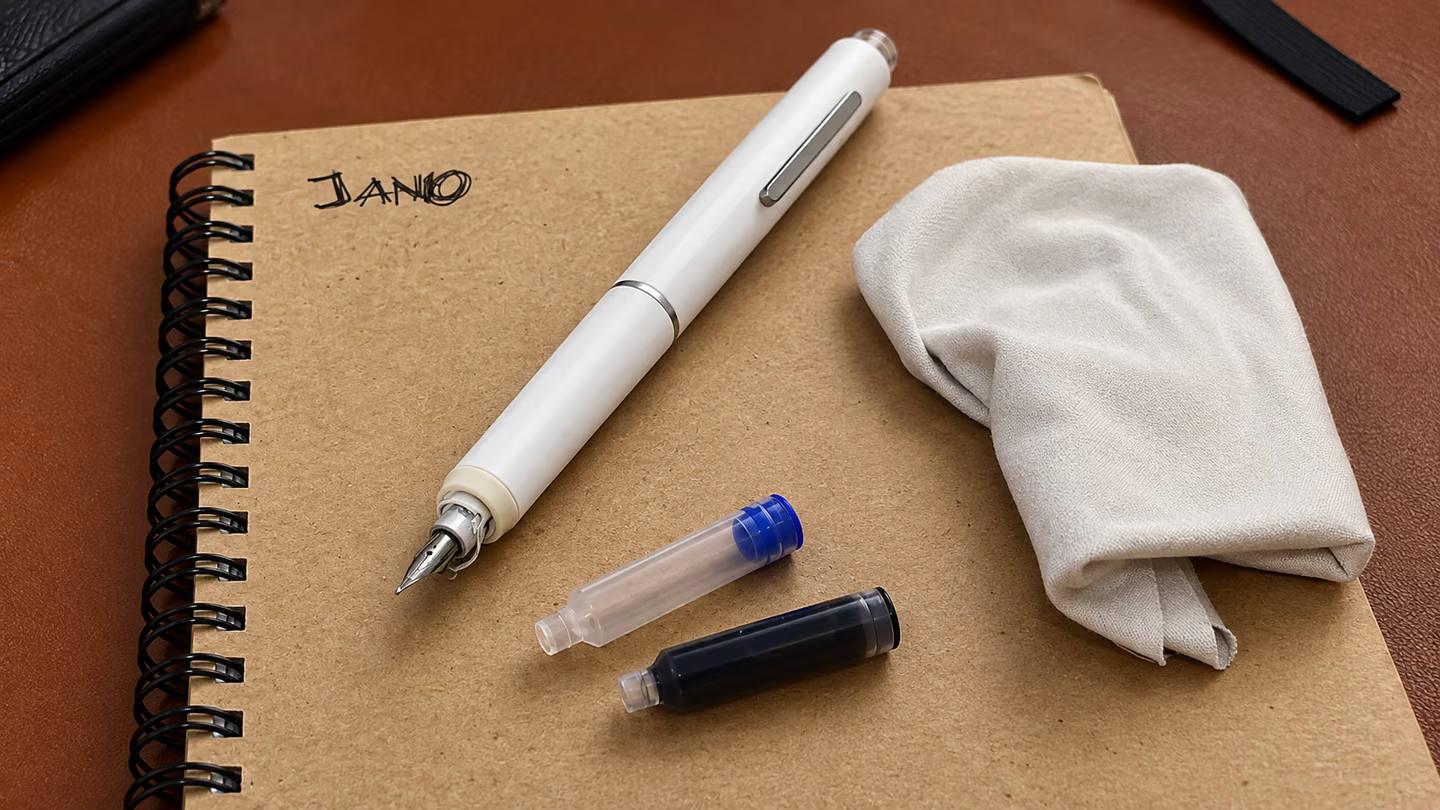
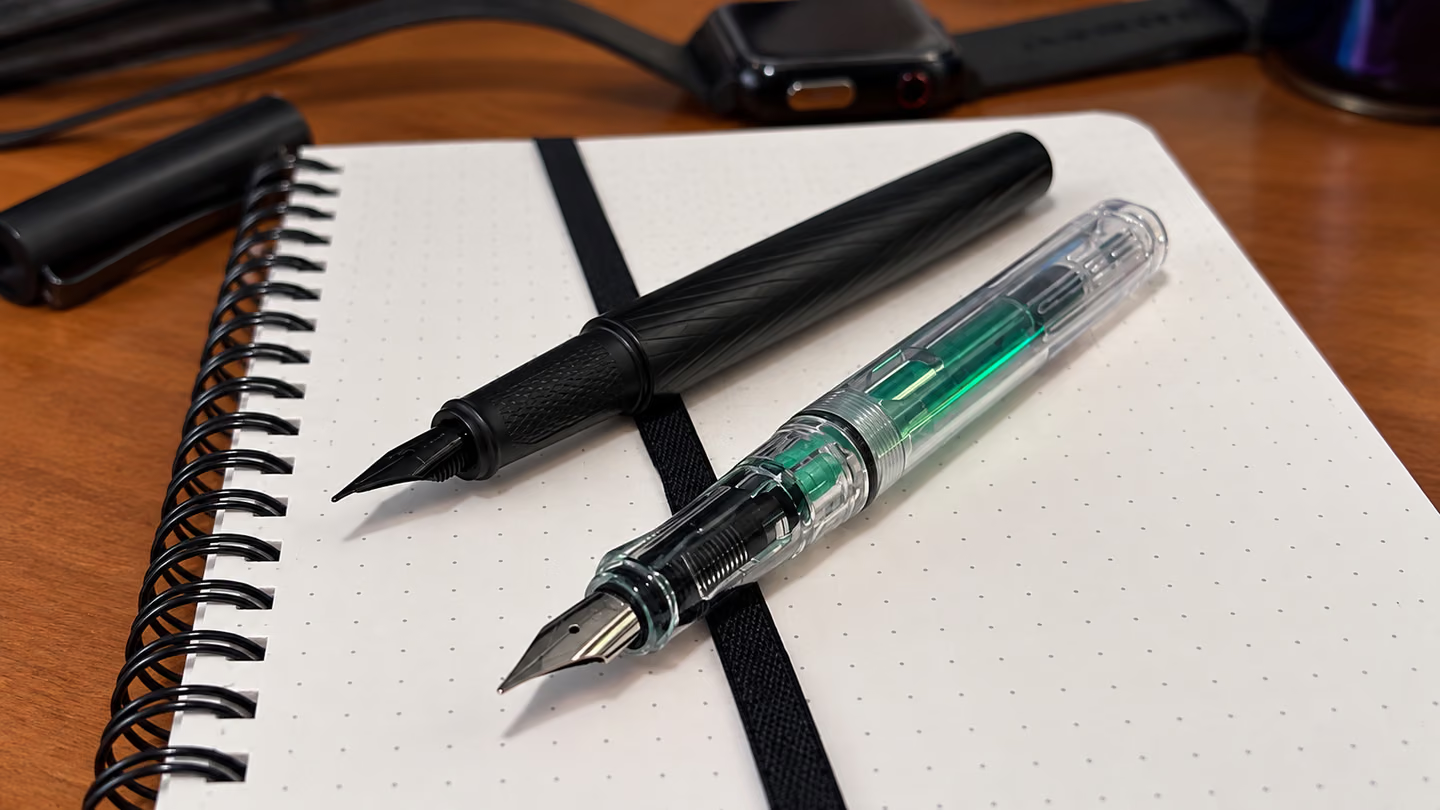
Even so, the Safari isn’t my favourite pen. My favourite is a Black Warrior that cost me less than R30… for a set of three! And each one even came with a converter compatible with several brands and models, including Lamy itself. I really like how light the Safari is, but the additional weight of the Black Warrior is much more comfortable for me.
If a 10-real pen can be much better for me than a 200-real one, it isn’t unreasonable to think that a 3,000-real pen won’t necessarily be better for me just because it’s expensive. Everyone has to find out what works best and what feels best, and if someone wants to buy an expensive pen and can afford it, why not?
Of course, there are many variables that affect the price of a more expensive writing instrument: the materials used, engineering and research, the weight of the brand name, quality control, etc. What matters, though, is how satisfied you are with the instrument — and in my case, the cheap little Black Warrior beats the German-branded pen.
What really matters when practising journaling is enjoying the act of writing, and for that, a R$3 Bic may be perfect. The problem begins when we do things backwards: instead of writing to discover what we like, we try to discover what we like before we even start writing.
It’s very easy to fall into this trap. Before starting a hobby, we look it up on the Internet. We find someone saying that a particular pen is excellent for journaling, someone else recommending a certain kind of paper, a third person explaining which inks we should use and, before we know it, an activity that required nothing more than paper and a pen has acquired a shopping list.
My low-budget suggestion is to do exactly the opposite: start with the pen you already have.
Write a few pages with it. Maybe everything is fine and the problem is solved; maybe you discover that it requires too much pressure, that the line is too broad, that the ink takes too long to dry, that your hand gets tired after two pages, or simply that you don’t like the way it feels moving across the paper.
Now you have an actual problem to solve!
That’s very different from buying a pen because someone said it was good for journaling. Now you know something about what you’re looking for. If the pen you have requires too much pressure, look for one that requires less. If the line is too broad, look for a finer point. If your hand gets tired, perhaps weight, diameter or shape matter to you.
That’s more or less how I discovered my own preferences. I didn’t start out knowing that I would like a fountain pen with a medium or fine nib, or that I would prefer a particular weight: I discovered these things by writing, and I’m still discovering them, because some of my expectations were simply wrong.
And there’s an important distinction here: liking pens can be a hobby too.
There’s nothing wrong with buying a pen because it’s beautiful, because its engineering is interesting, because it was made from a particular material, or simply because you want to own that pen. Likewise, there’s nothing wrong with collecting twenty different colours of ink when a single bottle would be enough to keep you writing for months.
We just don’t need to pretend that any of those things are requirements for writing in a notebook.
Trying and collecting pens and practising journaling are activities that go wonderfully well together, but they are not the same activity. It’s perfectly possible to enjoy one without enjoying the other.
So, if you’re thinking about starting to write and still don’t know which pen to buy, my recommendation is very simple: don’t buy one. Open the drawer, because your first journaling pen is probably already in there.